Milne Bay manta rays… The discovery of the manta ray cleaning station at Gona Bara Bara island is one of those classic Papua New Guinea diving stories. And illustrates again, just how rich the waters of Milne Bay are!
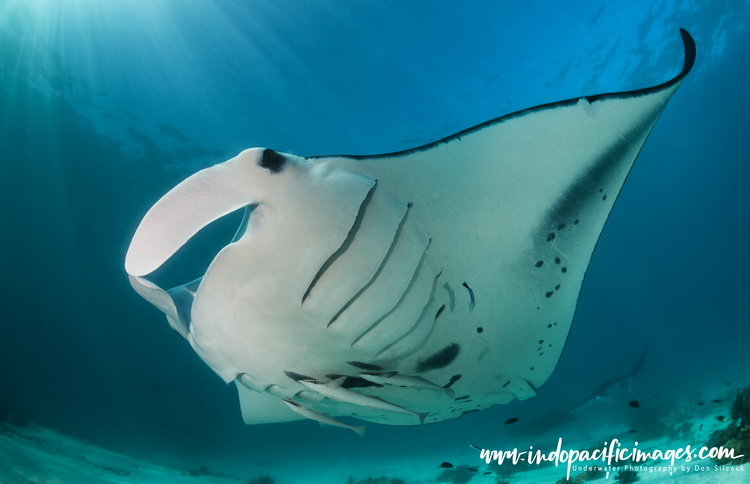
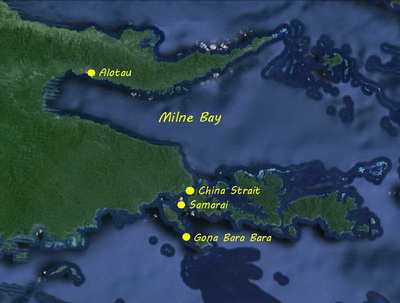
Located near to the former district capital of Samarai Island and the famous China Strait. Gona Bara Bara island is one of numerous small islands in the area with little to distinguish itself. Until that is Giants@Home and the Milne Bay manta rays were discovered.
Christened by Craig de Wit, the owner and skipper of the liveaboard MV Golden Dawn. Giants@Home is one of the most reliable places in all of Papua New Guinea to see and often interact with manta rays.
Golden Dawn had been chartered to search for mantas in Milne Bay. So Craig had gone to all the known manta ray locations but did not find a single one… Then in an act of inspired desperation he responded to the pleas of James, the boat’s engineer. Who was insistent that there were “lots of mantas just off the beach” of his home island.
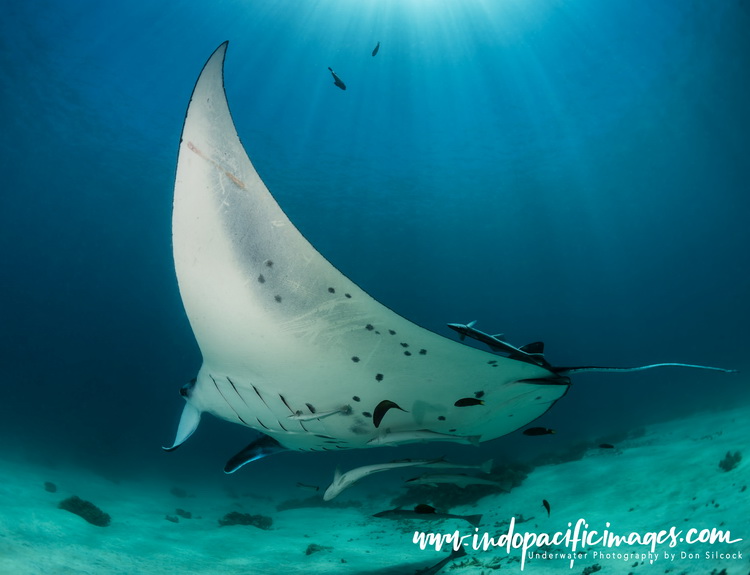
Milne Bay Manta Rays – Finding Them…
Here is how Craig described finding them: “I discovered the cleaning station when we went to the island, James my engineer kept insisting that he had lots of mantas at his island so we went in search of them.
On arriving we saw them around the place on the surface. So most of the group went for a snorkel in hope of getting close to them. I went for a dive along the beach hoping to get close and while drifting along in the current came across the cleaning station and I guess the rest is now history.”
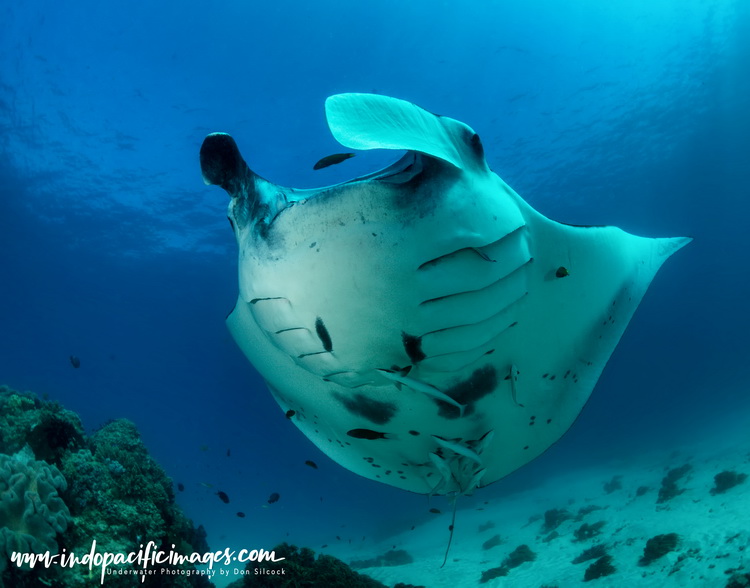
Golden Dawn managed to keep the site largely to itself for about two years. And during that time about 30 individual mantas were identified.
But as word spread about the cleaning station, and other boats started to visit the site. So Craig expected the mantas to move away – but it seems the opposite happened. As the mantas became more familiar with divers, their aversion to the exhaust bubbles produced by scuba gear went away.
Diving with the Milne Bay Manta Rays
Manta rays like most marine creatures suffer from parasites. Tiny organisms that live parasitically on their hosts and if left unchecked can infest organs and ultimately kill the host. Cleaning stations are a kind of marine version of a demilitarized zone. Where the normal rules of the reef (winner takes all…) are suspended under a process marine biologists call mutualism.
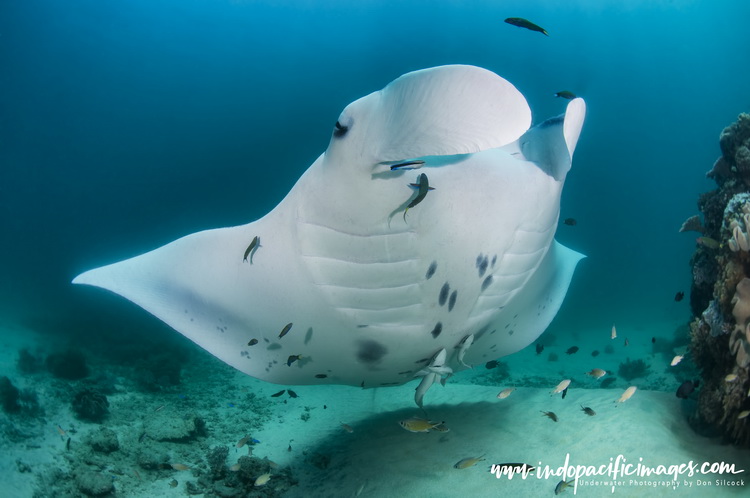
Mutualism is an arrangement that involves organisms from different species that exist in a mutually beneficial relationship. Whereby the larger creature is cleaned of its parasites while the smaller creature gets an easy meal without being eaten in the process…
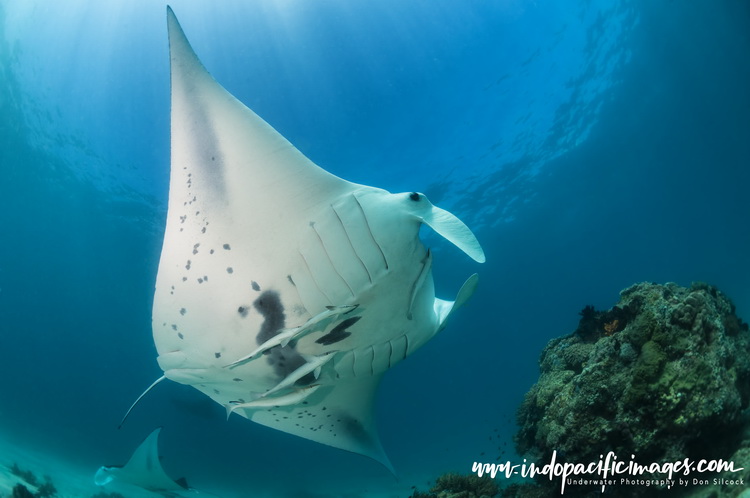
In the case of manta rays a cleaning station is usually just a large rock or bommie. Often in relatively shallow water, that is swept by currents.
It will host a large number of wrasse and other cleaning fish. As the mantas approach and signal they are ready to be cleaned by hovering above or close to the bommie. Giants @ Home is just like this – a solitary bommie in about 9m of water, which rises up to about 5m. It stands in an otherwise featureless sandy area just off the beach at Gona Bara Bara.
When diving the site, the trick is to enter the water well away from the bommie. So as not to disturb or aggravate the mantas, if they are already there… And if they are, your approach should be slow and steady, giving them time to get used to you.
Interacting with the Milne Bay Manta Rays
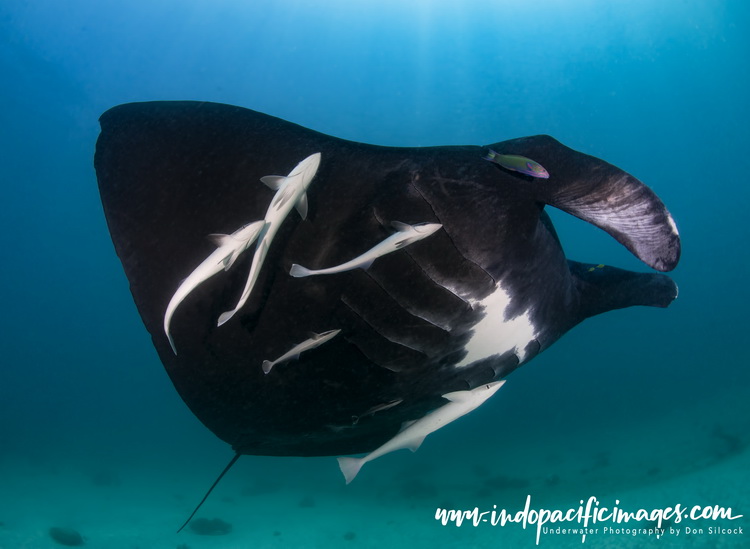
Manta rays are intelligent and curious creatures who will often come and check you out. But only if you adopt a non-aggressive and passive stance. Chasing them is not only stupid, it also has the opposite effect of virtually guaranteeing that they will leave.
So manoeuvre in close, but not too close and be conscious that you may be spoiling other diver’s photo-opportunities… And then wait for the mantas to come to you.
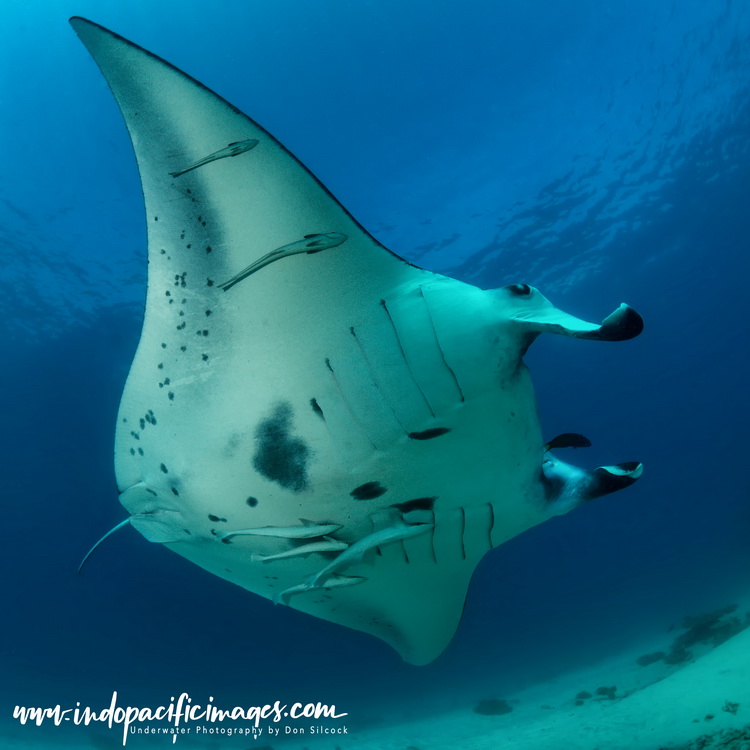
The mantas at Giants@Home have a quite special reputation. Because they appear to like the feel of diver’s bubbles on their sensitive underbellies. They will often just hang there above you savoring the experience. While others like to have their bellies scratched. You can signal this by holding your hand up prior to the manta coming in and as they approach they rub their belly on your hand!
How to Dive with them
Gona Bara Bara island and Giants@Home is located at the southern end of the China Strait, some 55kms from Alotau. So practically the only way to dive with the Milne Bay manta rays is as part of a liveaboard trip to that part of Milne Bay.
MV Chertan, which is based in Alotau, dives the area regularly. While MV Oceania also knows the site well and dives it in February and March each year when it relocates to Milne Bay.
Gona Bara Bara Critters…
In my experience the Milne Bay manta rays at Gona Bara Bara are reliable… That is, they have almost always been there when I was! But, they are wild animals and it’s their choice of whether they use the cleaning station that we know about.
There probably are other cleaning stations that we don’t know about… The bottom line being no guarantee that the mantas will be there, but if that’s the case all is not lost, as there is also some good critter diving at Gona Bara Bara!
Back To: Complete Guide to Diving Milne Bay